Skip to Content

Courses

All Courses

Mobile Crane Operator Training – NPORS + Class B, C1 & F Driving Licence (25 Days)

Mobile Crane Operator Training – NPORS + Class B, C1 & F Driving Licence (25 Days)

This 25-day comprehensive training program is designed to fully equip individuals to become professional Mobile Crane Operators by combining internationally recognized NPORS (National Plant Operators Registration Scheme) crane operation training with the necessary Ugandan driving licences. The course is aimed at new career seekers, existing industry workers looking to upskill (like riggers and banksmen), and companies seeking to train their employees to both global and national standards.

Course Structure and Content

The curriculum is divided into two main areas:

  1. Crane Operation (NPORS Standards): This section covers health and safety regulations, crane stability principles, interpreting load charts, practical hands-on operation, and communication with slinger signallers.

  2. Driver Training (Ugandan Licence Standards): This component provides theoretical and practical instruction for obtaining Class B (light vehicles), C1 (medium goods vehicles), and F (special construction vehicles) driving permits, including training on the Ugandan Highway Code.

Key Outcomes and Certification

Upon successful completion, participants will be able to perform all key duties of a mobile crane operator, such as interpreting load charts, conducting pre-use inspections, safely setting up and operating the crane, applying correct rigging techniques, and communicating with the ground team.

Graduates receive two distinct qualifications:

  • An internationally recognized NPORS Mobile Crane Operator Card.

  • An official Ugandan Driving Licence endorsed with Classes B, C1, and F.

This dual certification ensures graduates are fully competent, certified, and ready for immediate employment in industries like construction, logistics, and oil & gas. Assessment includes a theoretical exam, a practical NPORS skills test, and the official Ugandan driving permit examinations.


Instrument Installer – OPITO Level 1 (120 Days)

Instrument Installer – OPITO Level 1 (120 Days)

This comprehensive 120-day program provides the foundational training for a career as an Instrument Installer, designed to meet the rigorous, globally recognized OPITO Level 1 standards for the international energy sector. It combines essential theory with extensive hands-on workshop practice to build competence from the ground up.

Target Audience

The course is specifically designed for individuals with no prior instrumentation experience who are seeking an entry-level role. This includes:

  • School leavers or career starters aiming for the oil & gas, petrochemical, or power industries.

  • Electricians or mechanical fitters looking to specialize in instrumentation.

  • Anyone needing a formal, internationally recognized qualification to enter the energy sector.

Course Content and Outcomes

The curriculum progresses from basic principles to practical application, covering key areas such as:

  • Safety: Health, Safety, and Environment (HSE) procedures according to OPITO standards.

  • Theory: Principles of process measurement (pressure, temperature, level, flow).

  • Documentation: Reading and interpreting engineering drawings like P&IDs and loop diagrams.

  • Practical Skills: Using tools, bending and installing instrument tubing, and mounting instruments (transmitters, gauges, etc.).

  • Testing: Introduction to calibration, loop checking, and commissioning procedures.

Upon completion, graduates will be able to apply safety standards, use specialized tools, read technical drawings, install instrument tubing and devices, and assist senior technicians with basic testing.

Assessment and Certification

Assessment is continuous and includes a series of practical assignments and theoretical tests conducted under strict OPITO guidelines. Successful participants will be awarded the internationally recognized OPITO Level 1 Certificate for Instrument Installers, a key credential for starting a career in the global energy industry.


Piping Inspector – CSWIP (Painting & Welding) (30 Days)

Piping Inspector – CSWIP (Painting & Welding) (30 Days)

This is an intensive 30-day training program designed to develop highly skilled QA/QC professionals by providing a dual specialization in both welding inspection and painting inspection for piping systems. The curriculum is rigorously aligned with the globally respected CSWIP (Certification Scheme for Welding and Inspection Personnel) standards, preparing graduates for careers in the oil & gas, petrochemical, and construction industries.

The course is ideal for experienced tradespeople like welders and pipe fitters looking to advance into inspection roles, as well as for junior QA/QC personnel and engineers seeking formal, internationally recognized certification.

The program's learning outcomes are divided into two core areas:

  • Welding Inspection: Participants will learn to interpret technical documents like Welding Procedure Specifications (WPS), visually inspect welds for defects at all stages of fabrication, and apply the requirements of relevant codes and standards to ensure compliance.

  • Painting & Coating Inspection: This module covers assessing surface preparation and cleanliness, monitoring environmental conditions during application, and using a range of inspection instruments to measure coating thickness, adhesion, and detect flaws (holidays).

The entire program is structured to prepare participants for the official, independent CSWIP examinations. Upon successful completion of these external exams, graduates will be awarded internationally recognized CSWIP qualifications in both Welding Inspection and Painting Inspection, certifying them to work on critical projects globally.

EIT Engineer – City & Guilds Level 3 + ERA Permit Class A (65 Days)

EIT Engineer – City & Guilds Level 3 + ERA Permit Class A (65 Days)

This is an elite 65-day program for experienced electrical professionals aiming to achieve the highest level of technical and regulatory qualification in Uganda. The course combines the advanced engineering curriculum of the internationally recognized City & Guilds Level 3 with intensive preparation for Uganda's premier electrical license, the ERA (Electricity Regulatory Authority) Permit Class A.

The program is designed to transition senior technicians into an engineering role, focusing on electrical design, project supervision, and the inspection and certification of complex installations, with a crucial emphasis on High Voltage (HV) systems.

Target Audience

This advanced course is intended for senior electrical professionals seeking to formalize their expertise and gain the highest level of legal authorization. Ideal candidates include:

  • Experienced electricians who already hold a Level 2 qualification or an ERA Permit Class B/C.

  • Senior electrical technicians ready for engineering or supervisory roles.

  • Electrical supervisors and site foremen requiring high-level formal certification.

Course Content and Key Outcomes

The curriculum is divided into two main components:

  1. City & Guilds Level 3 Technical Modules: These cover advanced principles of electrical design and science, project supervision, health and safety legislation, advanced inspection and testing, and fault diagnosis for complex systems.

  2. ERA Permit Class A Preparation: This module focuses specifically on Ugandan High Voltage (HV) regulations, industrial HV system design requirements, and advanced safety procedures such as the Permit-to-Work system.

Upon completion, graduates will be able to supervise major electrical projects, design and test complex installations, diagnose faults, and safely plan and execute work on High Voltage (HV) systems in full compliance with Ugandan regulations.

Assessment and Certification

Assessment includes advanced practical projects, in-depth theoretical exams for the City & Guilds modules, and a final rigorous assessment simulating the ERA Class A examination.

Upon successful completion, graduates will receive two distinct qualifications:

  • A globally recognized City & Guilds Level 3 Advanced Diploma in Electrical Installation.

  • A certificate of training verifying their preparation and readiness to obtain the Ugandan ERA Permit Class A, the country's highest electrical installation license.


NDT Engineer/Operator – ASNT Level II (45 Days)

NDT Engineer/Operator – ASNT Level II (45 Days)

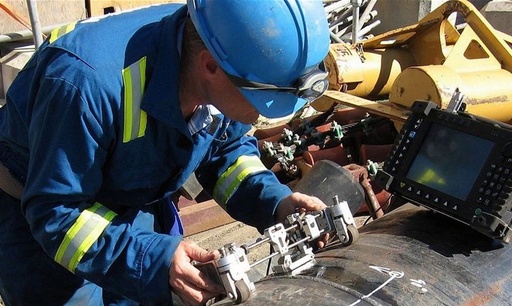
This is an intensive 45-day program designed to develop skilled and certified Non-Destructive Testing (NDT) technicians. The course provides comprehensive training across multiple major NDT methods, preparing participants for ASNT Level II certification, the globally recognized standard for a qualified NDT professional. The curriculum blends the essential theory behind each method with extensive hands-on practice using industry-standard equipment.

Target Audience

This program is ideal for individuals with a technical aptitude seeking a specialized career in quality assurance and inspection. It is well-suited for:

  • Aspiring QA/QC professionals and inspection personnel.

  • Welders, fabricators, and pipe fitters looking to transition into a certification role.

  • Engineering graduates or technicians who require practical, hands-on NDT qualifications.

Course Content and Key Outcomes

The program provides in-depth training in the following core NDT methods:

  • Visual Testing (VT)

  • Magnetic Particle Testing (MT)

  • Liquid Penetrant Testing (PT)

  • Ultrasonic Testing (UT), including thickness gauging and weld inspection.

  • Radiographic Testing & Film Interpretation (RTFI)

Upon completion, an ASNT Level II certified technician will be able to select the appropriate NDT method, set up and calibrate equipment, perform inspections according to written procedures, interpret and evaluate test results, prepare accurate reports, and supervise NDT Level I personnel.

Assessment and Certification

For each NDT method, participants undergo general, specific, and practical examinations administered in strict accordance with the American Society for Nondestructive Testing's recommended practice, ASNT SNT-TC-1A.

Upon successful completion of the exams for a given method, participants are awarded ASNT Level II certification in that specific method, demonstrating their competence to perform non-destructive tests and evaluations on projects worldwide.


Articulating Boom Lift – NPORS + Licence B, F (25 Days)

Articulating Boom Lift – NPORS + Licence B, F (25 Days)

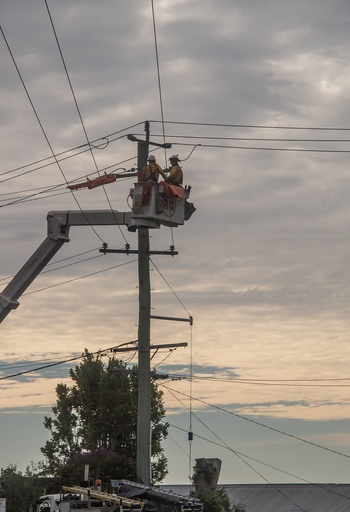
This is an intensive 25-day program designed to provide the complete qualifications for professionally operating Articulating Boom Lifts and legally driving them on Ugandan roads. The course combines the internationally recognized NPORS (National Plant Operators Registration Scheme) standards for safe operation with dedicated driver training to obtain Class B and F licences.

An articulating boom lift, also known as a "cherry picker," is crucial for reaching up and over obstacles in industries like construction, maintenance, and facilities management.

Target Audience

This course is ideal for individuals who need to work safely at height and transport their equipment. This includes:

  • Maintenance technicians, construction workers, electricians, and painters.

  • Facilities management personnel.

  • Anyone seeking a specialized skill in Mobile Elevating Work Platform (MEWP) operation.

Course Content and Outcomes

The curriculum is divided into operational and driver training.

Boom Lift Operation (NPORS Standards)

Participants will learn to conduct thorough pre-use inspections, safely maneuver and position the platform, operate controls precisely from the ground and platform, understand the machine's capacity limits, and carry out emergency lowering procedures.

Driver Training (Ugandan Licence Standards)

This section focuses on providing the theoretical and practical skills needed to safely and legally drive Class B and F vehicles on public roads, in compliance with the Ugandan Highway Code.

Assessment and Certification

Assessment consists of a theoretical test and a practical skills test for the NPORS certification, plus the official Ugandan driving permit examinations.

Upon successful completion, graduates receive two separate qualifications:

  1. An internationally recognized NPORS Trained Operator Card for Articulating Boom Lifts.

  2. An official Ugandan Driving Licence endorsed with Classes B and F.


Fire Marshal & Workplace Fire Safety

Fire Marshal & Workplace Fire Safety

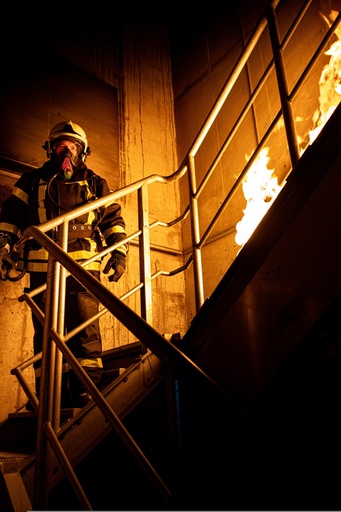
This essential course is designed to train individuals to become competent and effective Fire Marshals (also known as Fire Wardens) in the workplace. It moves beyond basic fire awareness to focus on proactive fire prevention, risk assessment, and the critical leadership skills needed to manage an emergency evacuation, ensuring the safety of personnel and property.

Target Audience

This training is essential for any employee appointed as a Fire Marshal or Fire Warden. It's also highly recommended for Health and Safety Managers, Facility Managers, Supervisors, and members of any workplace Emergency Response Team.

Course Content and Key Skills

The program combines theoretical knowledge with practical exercises. Participants will learn about:

  • Fire Science: Understanding the chemistry of fire (the fire triangle) and how it spreads.

  • Prevention and Risk Assessment: Identifying and mitigating common workplace fire hazards and conducting safety inspections.

  • Safety Equipment: Understanding the function of alarms, detectors, and suppression systems.

  • Emergency Leadership: Confidently leading a safe and swift evacuation, understanding human behavior in emergencies, and liaising with the fire service.

  • Practical Skills: Selecting the correct fire extinguisher for different classes of fire and safely operating it on a small, incipient-stage fire. 🔥

Assessment and Certification

Assessment is conducted through a written knowledge test and a practical demonstration of using a fire extinguisher. Upon successful completion, participants receive a Certificate of Competence as a Fire Marshal, verifying their ability to fulfill this critical safety role.


Confined Space Entry & Rescue Operations

Confined Space Entry & Rescue Operations

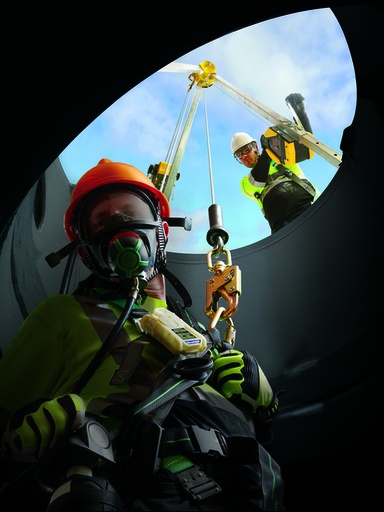
This critical safety course provides the essential knowledge and practical skills required to safely enter, work within, and perform rescues from confined spaces such as tanks, vessels, sewers, and pits. The program covers the entire safety lifecycle, from hazard identification and Permit-to-Work systems to atmospheric testing and the use of specialized entry and rescue equipment, with a strong emphasis on realistic, hands-on rescue drills.

Target Audience

This course is essential for anyone involved in confined space operations, including:

  • Industrial workers and maintenance technicians.

  • Oil & gas, utility, and construction personnel.

  • Designated workplace emergency rescue teams.

  • Supervisors and managers responsible for issuing confined space permits.

Key Skills and Course Content

The curriculum blends classroom instruction with intensive, hands-on practical scenarios, teaching participants to handle both safe entry and rescue operations. Key skills include:

  • Hazard Identification & Control: Learning to identify confined spaces, understand their potential hazards (toxic atmospheres, oxygen deficiency, etc.), and use a Permit-to-Work system to manage risk.

  • Atmospheric Testing: Correctly using gas detectors to test for flammable gases, toxic vapors, and oxygen levels before and during entry.

  • Safe Entry Procedures: Setting up and using safety equipment like ventilation fans and harnesses, and understanding the specific roles and responsibilities of the Entrant, Attendant, and Entry Supervisor.

  • Rescue Operations: Developing a rescue plan, setting up and operating rescue equipment (tripods, winches, retrieval systems), and performing both non-entry and entry rescues.

  • Breathing Apparatus: Understanding the critical importance and use of Self-Contained Breathing Apparatus (SCBA) in hazardous atmospheres and rescue scenarios.

Assessment and Certification

Assessment is conducted through a written examination and a series of practical evaluations where participants must demonstrate the correct use of equipment and successfully perform a simulated rescue. Upon completion, they receive a Certificate of Competence in Confined Space Entry & Rescue, validating their skills to work safely in and respond to emergencies within these hazardous environments.


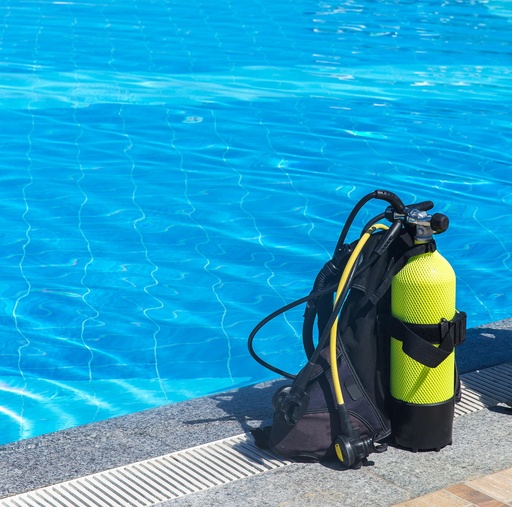
Water Diving & Aquatic Rescue Operations

Water Diving & Aquatic Rescue Operations

This highly specialized course equips participants with advanced skills for both professional water diving and emergency aquatic rescue. It's designed for individuals who need to operate safely and effectively in challenging underwater environments like lakes, rivers, and industrial sites, covering everything from planned work to unplanned emergencies.

Target Audience

This course is intended for professionals who work or perform rescues in aquatic environments. It's ideal for:

  • Members of professional emergency services, such as Police Dive Teams and Fire & Rescue.

  • Commercial personnel in marine construction, salvage, or at hydro-electric facilities.

  • Individuals seeking a career in public safety diving or underwater search and recovery.

Key Skills and Course Content

The curriculum is an intensive mix of theory, equipment workshops, and realistic in-water scenarios. Participants will master skills in two core areas:

Professional Diving

You'll learn to plan and execute dives in difficult inland water conditions (like low visibility), safely use professional equipment (including SCUBA and surface-supplied systems), and perform underwater tasks like inspections, rigging, and search operations. The course also covers dive physics and physiology to prevent diving-related illnesses.

Aquatic Rescue

This focuses on life-saving procedures, including effective surface water rescue for conscious and unconscious victims. You'll learn to plan and conduct systematic underwater search patterns, safely recover victims, and understand the command structure for a rescue diving incident. 🤿

Assessment and Certification

Assessment is rigorous, involving written exams and a series of demanding in-water practical evaluations that cover both diving competence and rescue scenarios.

Upon successful completion, participants receive a Certificate of Competence in Water Diving & Aquatic Rescue Operations, validating their ability to handle high-stakes underwater environments.


Defensive Driving & Road Safety

Defensive Driving & Road Safety

This essential program is designed to equip all drivers with the advanced skills and proactive mindset needed to navigate today's busy and unpredictable roads safely. Moving beyond basic driving rules, the course focuses on a defensive driving philosophy: anticipating hazards, managing risks, and preventing accidents before they occur. It's a critical investment for reducing collisions and protecting lives.

Target Audience

This training is vital for all drivers, regardless of their experience level, and is especially recommended for:

  • Professional and Commercial Drivers (trucks, buses, staff drivers).

  • Corporate Fleet Drivers whose safety is a company responsibility.

  • NGO and Field Staff who often travel on challenging or long-distance routes.

  • Individual Private Car Owners looking to enhance their safety and confidence behind the wheel.

Key Skills and Course Content

The curriculum provides a comprehensive approach to mastering defensive driving. Participants will learn to:

  • Apply Core Principles: Master techniques like the "3-Second Rule" for maintaining a safe following distance and managing speed appropriately for the conditions.

  • Identify and Anticipate Hazards: Learn to recognize potential dangers from erratic drivers, vulnerable road users (like pedestrians and boda-bodas), and changing road conditions.

  • Manage Human Factors: Understand and control personal factors that affect driving, such as fatigue, stress, and distractions.

  • Perform Vehicle Checks: Conduct routine pre-trip safety inspections to ensure the vehicle is roadworthy.

  • Handle Adverse Conditions: Safely maneuver and control a vehicle in difficult situations, including bad weather and on poor road surfaces.

The course covers everything from the principles of defensive driving and hazard recognition to collision avoidance and practical driving sessions. 🚗

Assessment and Certification

Assessment is conducted through a written knowledge test covering the key principles taught in the course. An optional on-road practical assessment is also available to evaluate the real-world application of these skills.

Upon successful completion, participants will receive a Certificate in Defensive Driving & Road Safety, demonstrating their commitment to safer driving.


Authorized Gas Tester & Atmospheric Monitoring

Authorized Gas Tester & Atmospheric Monitoring

This critical safety program trains personnel to become competent Authorized Gas Testers (AGT), a vital role for ensuring safety in hazardous environments. The course focuses on the principles and practices of testing for flammable and toxic gases, as well as oxygen deficiency and enrichment.

As a cornerstone of the Permit-to-Work (PTW) system, the AGT's function is crucial for preventing fires, explosions, and exposure to toxic substances in high-risk areas like confined spaces. The training combines in-depth theory with extensive hands-on practice using multi-gas detectors.

Target Audience

This course is essential for anyone required to perform atmospheric testing as part of their job, including:

  • Safety Officers and site supervisors.

  • Permit Issuers and approvers.

  • Maintenance Technicians and industrial workers.

  • Members of Confined Space Entry and rescue teams.

Key Skills and Course Content

The curriculum covers the theory of hazardous gases, the equipment used to detect them, and the procedures for safe work. Participants will learn to:

  • Understand Gas Hazards: Recognize the dangers of flammable, toxic, and asphyxiant atmospheres.

  • Use Gas Detection Equipment: Correctly select, set up, and perform pre-use checks on gas detectors.

  • Conduct and Interpret Tests: Perform accurate atmospheric tests and understand safe working limits, including LEL (Lower Explosive Limit), UEL (Upper Explosive Limit), and TLVs (Threshold Limit Values).

  • Integrate with Safety Systems: Confidently complete the gas testing section of a Permit-to-Work and ensure compliance with workplace standards.

💨

Assessment and Certification

Assessment includes a written examination on hazardous atmospheres and a rigorous practical test where participants must demonstrate competence in using gas detection equipment in simulated scenarios.

Upon successful completion, participants receive a Certificate of Competence as an Authorized Gas Tester, validating their skills to perform this life-saving safety function.


Overview

No leaderboard currently :(

Filters